
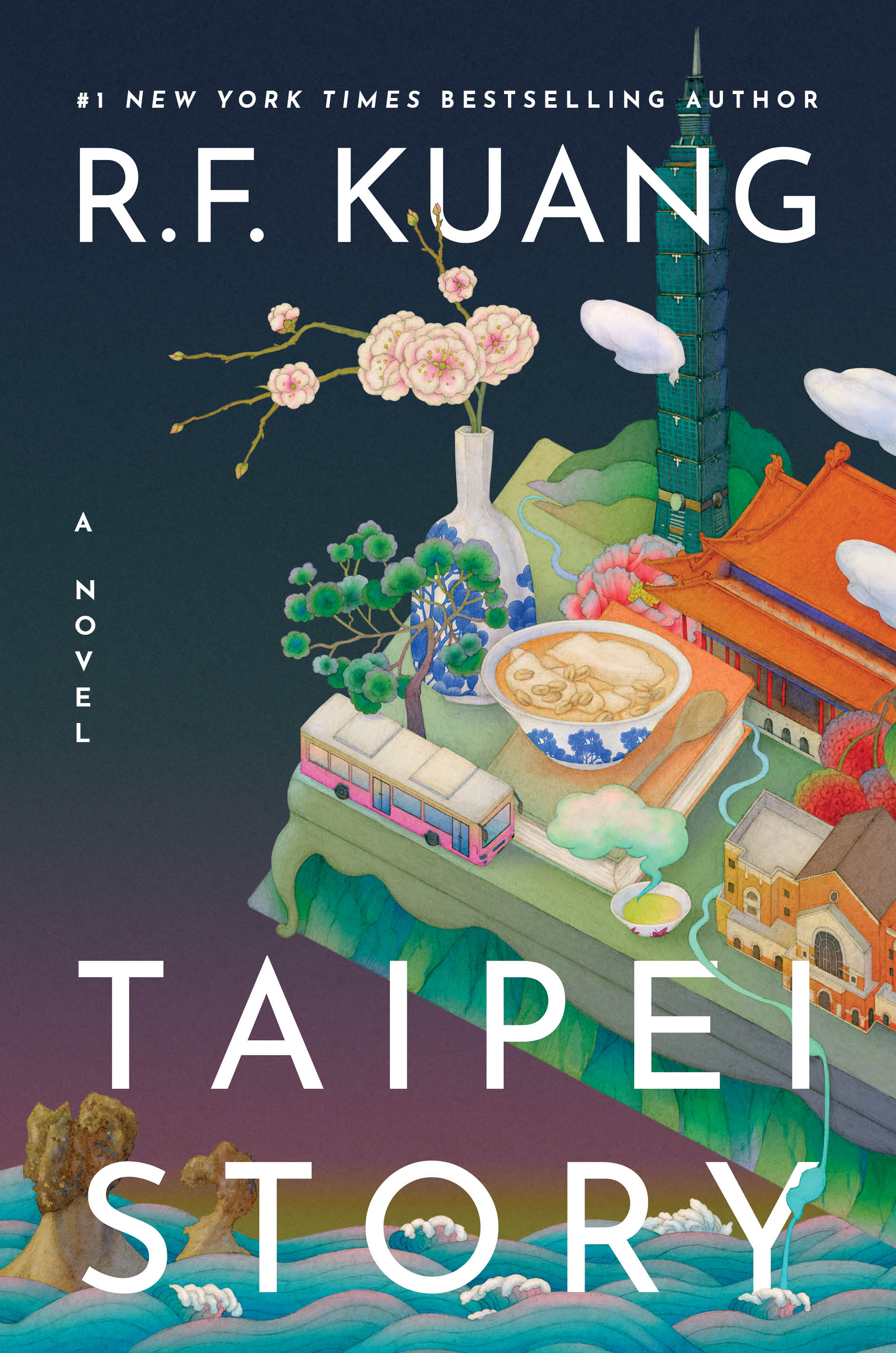

RF Kuang is one of those authors who I am equally fascinated and frustrated by. The pure weight of the concepts she tackles in her novels, from turning graduate research into a literal descent into hell to a gritty alternative fantasy history of China to the British Empire’s exploitation of foreign nations to transforming literary plagiarism into a thriller (yes, she has written all of that in less than ten years), always seems too great for the strength of her prose and plots to carry. Many of her characters read as thinly disguised self-inserts, and the moral and thematic issues her novels address can feel very undeveloped. Yet the ambition and creativity of her ideas keep intriguing me. There’s an extremely intelligent and knowledgeable person behind these stories with the capacity for incredible storytelling, if only she would slow down long enough to hone her craft.
As a former linguistics student and foreign language learner myself, Kuang’s analysis of culture, language, and history hits home. In fact, she’s so educated that I believe she might suffer from the same malady as many professors—when you know enough about a niche subject to write entire novels, it can be difficult to distill that knowledge into an enjoyable story with something meaningful to say about all of that information. Regardless of how well I think she executes her vision, I always come away from Kuang’s books with lots to ponder. This was the case with her latest, a work of contemporary fiction titled Taipei Story.
Though I am not a heritage language speaker, I did form a strong connection to the German language and culture during my undergrad, and for this reason, Taipei Story’s themes really struck home for me. The main character, Lily, travels to Taipei for a summer-long intensive language course to reconnect with her Chinese heritage. She comes full of excitement and a desire to set her Americanness aside and become “more Chinese.” Only her experiences aren’t so much a reconnection as a confusing, convoluted reconstruction of identity. Lily’s family comes from mainland China and has zero connection to Taiwan. She’s doubly a tourist in this new country where everything is familiar from afar yet utterly foreign up close.
Lily’s experiences were extremely relatable to me, as I spent two summers in Europe improving my German. The language learning process was so well described because Kuang, a scholar in East Asian literature and languages, shares many of Lily’s experiences. Language learning is a messy process that defies our American concept of linear progression, as the book’s layout reflects. Taipei Story’s plot and conflict mostly come from Lily’s evolving understanding of her own Chinese identity. The book is told in short vignettes that often seem to start and end abruptly. Kuang isn’t concerned with a traditional climax arc that neatly resolves the story’s conflict, but rather with sharing her character’s experiences and how those shape her perspective over the course of the summer. The reader rarely receives clear resolution, both in the individual scenes and in the story as a whole, yet the Lily who leaves Taipei feels much more interesting and complex than the girl who arrived.
This storytelling style reminded me of the Asian movies I’ve seen, and I wonder if Kuang intentionally adopted this technique to mirror the novel’s Taiwanese setting. I did think that a lot of the issues and themes Taipei Story touches on weren’t explored as thoroughly as they could have been. The book feels a bit like a blink. Lily’s summer keeps moving regardless of whether she was emotionally ready to leave the issues she grapples with behind, and suddenly it’s time for her to go home, leaving many of her questions (as well as the reader’s) about herself, her family, and her Chinese heritage unanswered. Yet this is its own message. Life keeps going. Lily began her summer with a measure of fear, but her attitude was primarily characterized by certainty. She left with a much quieter understanding of how little she truly knows and how large the world around her is. Thus, Taipei Story ends with a list of questions and a subtle charge to look not ahead to our own futures, but back to where we have come from.
Content Warning: this novel contains a mild sexually toned scene. Taipei Story receives a 7.8/10. It’s available wherever books are sold, but most importantly at your local library.
Tags –
Leave a Reply