
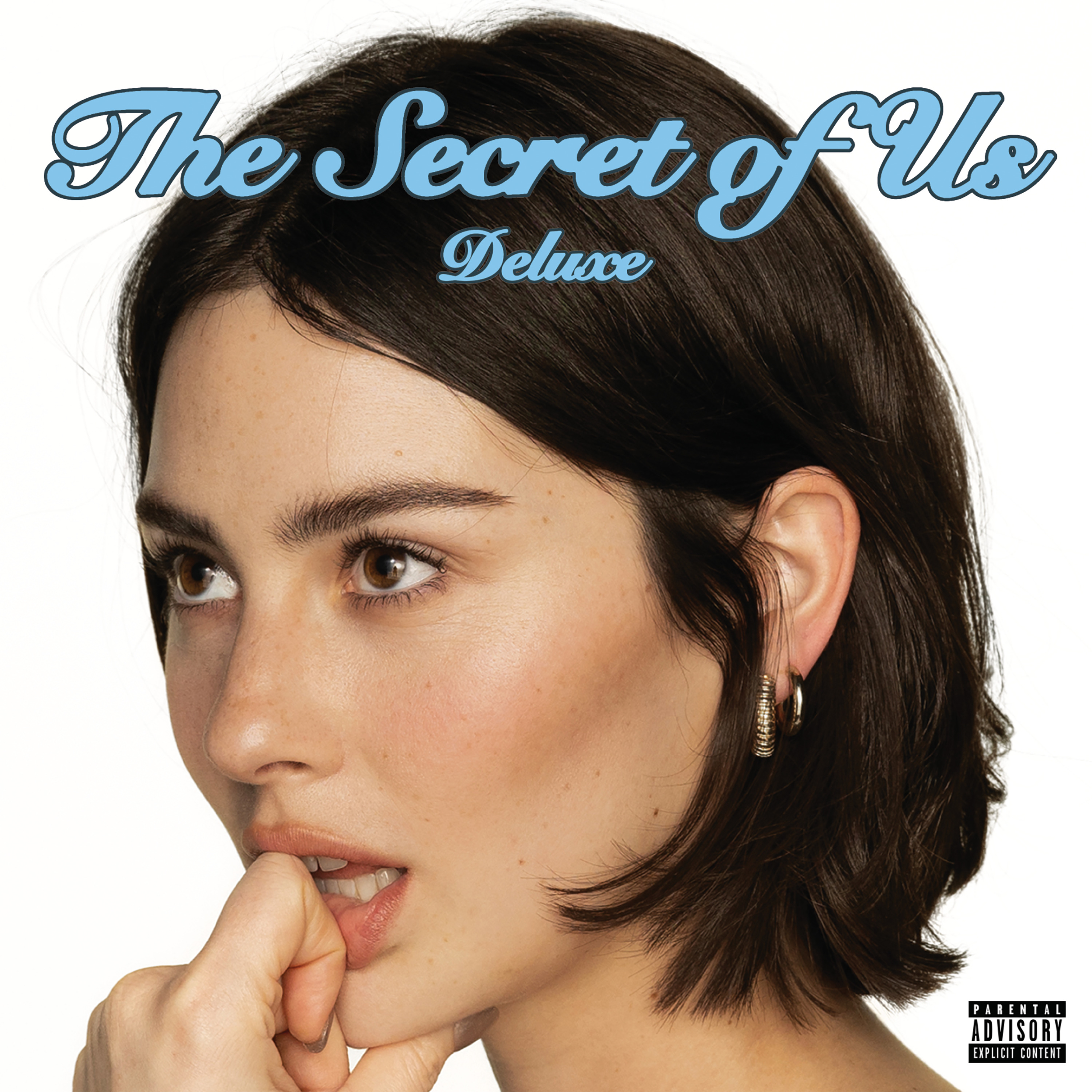

What happens to a girl’s mind when she’s full of secrets? Gracie Abrams answered that question when she released her second album, The Secret of Us, two years ago in June, 2024. The record emerged from a combination of negative relationships and her first touring experiences, culminating in a 13-track standard edition and 17-track deluxe that pushed Abrams beyond her indie-pop roots into bigger choruses, Taylor Swift-style rant bridges, and sharper observations of her own life. The Secret of Us reveals much about the interiority of a woman navigating early adulthood in the modern age, and Abrams wasn’t her fans’ “little secret” anymore after this album.
Thematic Analysis
The Secret of Us’s story hinges around “us.,” aptly placed as the fifth track in a nod to feature Taylor Swift. In Swift’s albums, the fifth track is typically the record’s emotional core, which Abrams emulates. Though the album seems to stitch together multiple muses rather than a single relationship, “us.” shows the central thread of a narrator haunted by her romantic past. The lyrics are removed and driven by metaphor rather than specificity, yet Abrams’ tone and word choices evoke a three am Notesapp rant, revealing all the pain and emotion that she hasn’t been able to share. “us.” begins with repressed pain (and vocals), then ramps up into an emotionally explosive bridge only to fall back into depression, a pattern followed by many of the album’s tracks. The Secret of Us occurs, for the most part, once the relationships have utterly failed and left the narrator wounded by her secrets.
Not every story on the album is a reflection, however. Many of its earworms, including “Risk,” “Close to You,” and deluxe track “That’s So True,” occur in the moment. So in the moment, in fact, that the switch from melancholia to manic energy feels like the mood swings—or even anxiety attacks—of a young person desperately trying to cope with their feelings. From outbursts of relatably written emotion to subdued ramblings to an achingly felt desire for connection, The Secret of Us is an album that many in their late teens and early twenties will identify with. Despite her regrets from the unhealthy relationships she describes throughout the album, Abrams still longs for love… even if it won’t last or will end in the kind of pain she’s already experienced. Her ability to emote as she shares those experiences is impressive for such a young artist.
Critiques
Abrams’ strengths as a writer and performer on The Secret of Us also become its weaknesses, however. Take her vocal performance. On past projects, she sang almost exclusively in a whisper voice, adjacent to cursive singing. Her songs blurred together sonically, and her lack of enunciation made her lyrics difficult to understand. “Normal Thing” and “Good Lucky Charlie ” suffer from this style. They are, frankly, dull songs, and the thematic weight of a track like “Free Now” is difficult to appreciate because of how long the production takes to go anywhere interesting. At the very least, the album would have benefited from a rearranged tracklist that split the sluggish tracks up better. Additionally, the deluxe tracks are stronger than a few of the album cuts, so a few switches would have strengthened the original record’s quality by a decent margin.
Abrams experiments with poppier production and more challenging vocals on The Secret of Us, to mixed results. Her voice’s breathy, unsupported quality is a double-edged sword. She communicates emotion very effectively, heightening the strengths of her writing, but lacks the vocal strength to truly sell higher-tempo songs like “Risk” and “That’s So True.” Tracks like these are easy to sing along to while needing a bit more finesse to shine as brightly as they could. The best moments from the album push the boundaries of Abrams’ style, whether by experimenting with new sounds in “Close to You” or adding stronger production to her wheelhouse like “I Love You, I’m Sorry,” “Let It Happen,” and “Cool.”
The writing style used on most of the album, the diaristic confessional songwriter spilling their secrets ala Taylor Swift, requires a level of lyrical skill that Abrams is still developing. Word vomiting feelings, even when carefully arranged into the structure of a song with an anthemic chorus and rantable bridge, doesn’t necessarily create artwork. Abrams excels at distilling her experiences into lines that are easily applicable to her audience’s lives, but when held under scrutiny, much of her writing lacks specificity and depth compared to her contemporaries. She relies heavily on metaphors rather than specific description—metaphors often shallowly explored and quickly abandoned. Still, the songs connect (for the most part), and The Secret of Us has moments of lyrical gold.
Track Ranking
Though The Secret of Us has much room for growth, Abrams still crafted a collection of very enjoyable songs that incorporate a range of genre conventions—bedroom pop, indie country, synth pop…—while pushing her artistically beyond her previous work.
Cuts
Tracks that the record would have been better without.
17 — “Normal Thing”
16 — “Free Now”
15 — “Good Luck Charlie”
Filler
Tracks that give the record volume but could have been improved. *deluxe track
14 — “us.”
13 — “I Knew It, I Know You”
12 — “Gave You I Gave You I”
11 — “Packing It Up”*
10 — “Tough Love”
9 — “I Told You Things”*
8 — “Felt Good About You”
7 — “Risk”
Essentials
Tracks that most effectively encapsulate the spirit of the record. *deluxe track
6 — “Let It Happen”
5 — “Blowing Smoke”
4 — “That’s So True”*
3 — “Close to You”
2 — “I Love You, I’m Sorry”
1 — “Cool”*
Brosnan Butt’s Counterpoint
The Secret of Us was Gracie’s introduction to mainstream awareness. Because of this fact, it is important that the album properly lays out who she is as a person (or character) in her work and what makes her songs unique, interesting, and valuable. By and large, The Secret of Us succeeds. Listeners are introduced to Gracie as a deeply observant and reflective woman who also can be cheeky and funny when the time is right, and she isn’t afraid to stab back at those who wronged her. Her voice ranges from a timid, vulnerable whisper to an enraged snarl throughout the project. There is a lot here for every type of listener to latch onto. There are big pop moments in the furious and witty “That’s So True,” a ranty stream-of-consciousness Swiftian anthem in “us,” and for us Good Riddance fans, anguished ballads like “I Knew It, I Know You.” Like Good Riddance, some slower tracks may turn less invested listeners off and leave true fans believing them criminally underrated. “Normal Thing” and “Free Now” are the best kind of mid-to-low tempo song here. “Good Luck Charlie,” however, drags the tracklist down. Some of the album visuals are baffling (I’m looking at you, back vinyl cover). But for a sophomore album, The Secret of Us is a pleasant and endearing step towards stardom.
Looking Ahead
With her new album, Daughter from Hell, arriving later this month, I’m excited to see how Abrams’ sound and writing have evolved. Based on promo material and lead single “Hit the Wall,” she already seems to be deepening the ideas and techniques from The Secret of Us that worked best. “Hit the Wall” is more alternative than bedroom pop, and I’d love to see more songs from her with that kind of production and attention to melodic progression. I’m hopeful that her writing on the new record will be stronger and incorporate creative perspectives and references beyond the “girl ranting in her room” vibe she’s leaned into thus far.
Conclusion
Despite its quality control issues, The Secret of Us is a compelling listen. The best tracks are dynamic, heartwrenching, and reflect the lived experiences of many in their early twenties. While the concepts and ideas tend to outmatch Abrams’ ability to convey them, the record has glimpses of brilliance hinting at opportunities for artistic growth in future projects. I look forward to seeing how Daughter from Hell adds to her discography and continues in conversation with her previous projects.
The Secret of Us receives a 6.8 for the standard edition and a 7.2 for the deluxe edition. The album is available on all streaming platforms and wherever music is sold.
Tags –
Leave a Reply