
The Life of a Showgirl Review: Track by Track

Taylor Swift’s latest record, The Life of a Showgirl, only features twelve tracks, a shocking about-face from opulent runtimes on her previous few albums. Swift promised that this would be an album of precision rather than excess. The songs were written during the Eras Tour’s European leg—no vault tracks, no double album, no surprises—and each would be Max Martin-crafted pop perfection with a folkloric Taylor Swift twist. Her estimation of the record’s quality fell far short of reality. The production and composition are fantastic across the board, but Swift’s lyricism often reads like a Notes App first draft. The Life of a Showgirl is all style and little substance. Let’s dissect what went wrong.
Cuts
Tracks that the record would have been better without.
12 — “Eldest Daughter”
Since early in her career, Swift has reserved track 5 for the record’s emotional linchpin. This fabled canon includes “All Too Well,” “tolerate it,” “Delicate,” and “Dear John,” all widely considered among her best work. Though track fives aren’t always hits, there’s a weight to their presence that “Eldest Daughter” utterly lacks. It’s amateur in comparison to its peers. The composition screams “I have something to say,” as if setting any lyric to a stripped-back piano makes it important. “Eldest Daughter” is far too concerned with trying to convince the listener that “Everyone’s so punk on the internet” and “But I’m not a bad bitch / And this isn’t savage” are grand artistic statements (the operative word being “try”) to say anything interesting about the eldest daughter concept. The writing veers from offensively on the nose and littered with outdated internet slang to vagaries that barely convey anything.
Swift’s trademark sincerity works double-time against her, transforming corny lyrics into unbearable faux-emotion. “Everybody’s cutthroat in the comments / Every single hot take is cold as ice / When you found me, I said I was busy / That was a lie” sounds even more ridiculous in ballad form than it reads. Swift commented that the track explores a character who chased trends and then found peace in retreating from them. Unfortunately, she wrote “Eldest Daughter” instead of that song. The track’s only redeeming qualities are a great bridge, one of Showgirl’s few classically Swiftian bridges, the composition, and the production… all ruined by the lyrics.
11 — “Wi$h Li$t”
The perspective of “Wi$h Li$t” is familiar—the out-of-touch billionaire who’s “comfortable,” never wealthy, and doesn’t care that much about money anyway. She unconvincingly claims disinterest in “that yacht life” under those “bright lights and Balenci’ shades.” Rather, her wish list invokes details of suburbia like “a couple kids,” “a basketball hoop,” and “a best friend who I think is hot.” This sentiment could be cute; instead, it’s both boring and unconvincing. The claim of preferring love to money falls apart when both are clearly present. The track conveys its tone-deaf message in the most obnoxious way possible, “$”s and all. Poor taste aside, this would be one of the best tracks on the album if the production and composition weren’t wasted on an irksome premise.
10 — “The Life of a Showgirl”
Showgirl’s title track commits a rare faux pas for Swift—being boring. Maybe it’s the stomp-clap rhythm. Maybe the country inflection in her and Sabrina Carpenter’s vocals (a winning formula in Carpenter’s own music that somehow falls flat here). Or maybe it’s the meandering melodies that culminate in a lackluster chorus. Whatever the case, “The Life of a Showgirl” is a slog, leaving little impression beyond a few sonic hooks despite strong storytelling. It’s ironically one of the only tracks on the album that incorporates any of the showgirling from the promo and marketing, which says a lot about how closely the album follows its supposed concept. At least it ends the album on a sweet note of the actual goodbye from the last Era’s Tour show.
09 — “Honey”
Once, Swift wrote a song about a “Mean” critic who used his influence to stomp on her. Now, she’s powerful enough to be the “monster on the hill” leering down on others. “Honey” is strange. Almost catchy, yet backed by a cliche beat. Almost clever, yet lyrically clunky and confused. The track describes how strangers can sour terms of endearment that are then redefined within a loving relationship. However, the upbeat production contrasts strangely with negative lyrics that, as an afterthought, slip in the positive twist we’re meant to believe is the song’s purpose. “You can call me honey if you want because I’m the one you want” is a much weaker hook than Swift wants it to be.
08 — “Actually Romantic”
“I heard you call me ‘Boring Barbie’ when the coke’s got you brave” is an incredible start to a diss track. Swift has long cast herself as a victim of public opinion, but on “Actually Romantic”, she embraces the viciousness often directed at her over a punky, vocal distortion-aided track. “Actually Romantic” reduces the unnamed adversary to “a toy chihuahua barking… from a tiny purse”—a great idea marred by offbeat phrasing. Swift thought their attention was so cute and toothless that she wrote a song all about how unbothered she was.
While her disinterest is unconvincing, the lyrical perspective of reducing a failed rival’s attention to something almost romantic creates fantastic lines, such as “But it’s actually sweet / All the time you’ve spent on me… / No man has ever loved me like you do”. However, for every clever line, there’s a clunker soon after. Boring melodic choices don’t do the track any favors, either. “Actually Romantic” can be a fun listen, but it grates once the shock wears off.
Filler
Tracks that give the record volume but could have been improved.
07 — “Ruin The Friendship”
“Ruin The Friendship” harkens back to high school (one of Swift’s favorite muses). In slightly awkward yet sentimental lyrics, she reflects on a past crush who passed away before she could confess her feelings. Swift sings in a soft, wistful tone that, paired with the drum loop and acoustic guitar backing the track, could have been an outtake from Red. Unfortunately, the vocal layering on the climactic final chorus and post-chorus creates a grating effect, undermining the lyrics’ emotional weight. Still, “Ruin the Friendship’s” reflection on what could have been creates a somber moment that may have been better suited for a different album.
06 — “Wood”
Showgirl’s catchiest track is also the album at its most ridiculous. The entire point of “Wood” can be surmised by the title. However, Swift takes her time reaching the unforgivable punchline in the post-chorus, delivering her signature irresistible melodies and clever lines about love and superstition (counting daisy petals, fingers crossed, wishing on a star, knock on wood, etc.). “Wood’s” hookiness plays against itself when its most sensational lines become trapped in the listener’s head. The onslaught of innuendo after the first post-chorus is shocking, then funny, then exhausting. Any one or two of the jokes (barring that line) could have landed, but they’re too much all together. It’s telling that the clean version is more enjoyable despite awkward lyrical changes.
05 — “CANCELLED!”
“CANCELLED!” takes a new perspective on one of Swift’s most popular subjects: cancellation. But this time, instead of dissecting her own reputation, she’s turned to a friend’s. They’re “cloaked in Gucci and in scandal,” strutting to swanky electric guitar strumming. Swift’s detached vocal delivery evokes a feeling similar to the expressions models adopt on the catwalk, a choice that comes across as more bored than cool. However, Swift alters her intonation for each pre-chorus line, casting herself as a series of online haters commenting on her canceled friends. While some lyrical moments land with a thud, an actual bridge (one of Showgirl’s few) that builds into a final verse and extended chorus more than makes up for the debatable inclusion of “Welcome to my underworld where it gets quite dark”. More importantly, “CANCELLED!” actually uses Max Martin’s genius for creating earworms. The ghost of reputation is sleepy but alive and well.
Essentials
Tracks that most effectively encapsulate the spirit of the record.
04 — “Father Figure”
The Tortured Poets Department’s “Clara Bow” tackled legacy from Swift’s own perspective, reflecting on Stevie Nicks while looking ahead to the next young starlet possessing the “edge… she never did.” “Father Figure” adopts the perspective of the men around these women, men who “pay the check before it kisses the mahogany grain.” This mafia boss persona controls an empire built on young female artists. As a lyricist, Swift is most interesting when imagining the lives of other people, though Showgirl is the first time she’s adopted a character unconcerned by actions broadly considered immoral. She positions herself as the newly minted “Father Figure”, whose wealth and power render him untouchable. Though wordy lines at times dilute the track’s brilliance, it’s a fascinating character study and commentary on Swift’s place in the industry.
03 — “Opalite”
“Opalite” is at once a gloriously upbeat pop-rock number, complete with cheesy ad-libs and throwaway besotted lines, and an excellent metaphor cleverly transposed into song. The titular gem happens to be manmade, adding layers of meaning to “Sleepless in an onyx night / But now, the sky is opalite.” For an artist who built a decades-long career off heartbreak, “You had to make your own sunshine” feels like Swift taking a victory lap. It’s Lover without the anxiety and 1989 without the desperate drive for success. On her twelfth (and most successful) album, Swift can take leisure in the “Opalite” she’s created. As many commenters have pointed out, this should have been the album title, as it supports a thesis statement more central to the album than the forgettable title track. Having “danc[ed] through the lightning strikes,” Swift can honestly declare “Don’t you sweat it, baby” and take a bow.
02 — “The Fate of Ophelia”
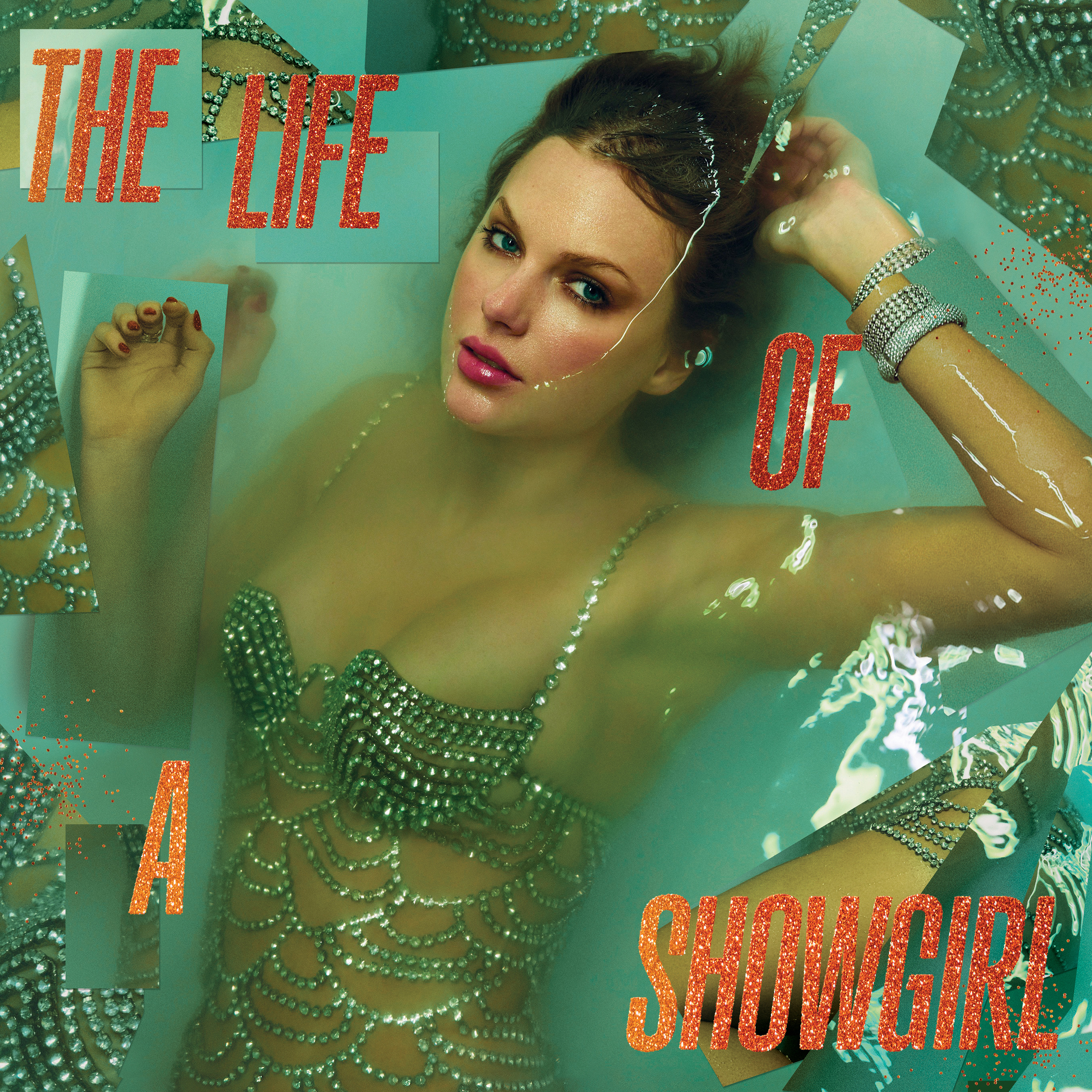
Showgirl’s cover art, Swift half-drowned and looking up from the water of presumably a bathtub, positions the album as a reference to Friedrich Heyser’s Ophelia painting. The tragic heroine of Shakespeare’s Hamlet drowned, used and neglected by the men around her. Despite this story’s resemblance to Swift’s career, she turns it on its head, singing to a lover who “saved [her] heart from the fate of Ophelia”. The track encapsulates the essence of Swift’s artistry—references to classical literature and art built into a modern and incredibly catchy pop song. The track has no right working as well as it does. It opens as a piano ballad, then transforms into funky (the genre, but also the vibe) synth-pop. Speaking of vibes, “Pledge allegiance to your hands, your team, your vibes” should not be a line, much less a line in the same song as “’Tis locked inside my memory / And only you possess the key / No longer drowning and deceived / All because you came for me.” Yet, for the most part, the melding of old and new language flows skillfully together (“Eldest Daughter” wishes it were this good). Swift’s style of wordy pop that emerged in Midnights doesn’t always hit the mark, but when it does, it sings.
01 — “Elizabeth Taylor”
“I’d cry my eyes violet, Elizabeth Taylor” might be Showgirl’s best hook (and the vivid imagery referencing Elizabeth Taylor’s famous violet eyes doesn’t hurt). “Elizabeth Taylor” captures the listener instantly with an explosive intro, reels back the energy for a vivid series of images in the verse, and erupts again for the chorus. It’s Swiftian storytelling at its best. Profuse wordiness in the verses brings down the energy a little too far, but the specificity of the lyrics largely compensates. Like on “Clara Bow”, Swift ties her own journey to Taylor’s, referencing the legendary actress’s haunts in conjunction with personal musings on stardom. “All the right guys promised they’d stay,” she complains, but “Under bright lights, they withered away / …you bloom.” Ironically, “Elizabeth Taylor” hits at the ideas in “Wi$h Li$t” with nuance the latter couldn’t dream of. Swift asks her muse how to navigate being caught between longing for Hollywood glamor and fun with faithful love, all in a world where no one can compete with her success.
Conclusion
For all its glitzy marketing, The Life of a Showgirl is a good EP buried in a middling record. “Elizabeth Taylor,” “The Fate of Ophelia,” “Opalite,” and “Father Figure” land in the top half of Swift’s impressively storied discography, but nothing on this album can touch Swift’s greatest hits. Furthermore, every moment she stepped behind the microphone for a reason other than performing, Swift’s comments on Showgirl described a much better album than the one we received. Perhaps she mixed up the promo dockets for Showgirl and TS13. The Life of a Showgirl feels more like a brief diversion than a true moment, with little to no showgirling to be found.
The Life of a Showgirl receives a 5.7. The album is available on all streaming platforms and wherever music is sold.
Tags –
Leave a Reply